Designing a Year-Round Indoor Herb Corner: Principles and Small Setups
Problem
Many people want the convenience of fresh herbs but find their small indoor plants floppy, infested with pests, or wilting after a few weeks. Common issues are predictable: insufficient light, overwatering, poor soil choice, wrong container size, or simply no routine for pruning and harvesting. The result is wasted time, a cluttered counter, and a sense that indoor gardening is fussy or fragile.
This article reframes the problem as a design exercise: build a small herb corner that matches your light, space, and cooking habits. Instead of chasing perfect tropical conditions, we apply a handful of principles and illustrate three compact setups you can copy or adapt.
Principles
1. Match light to plant needs
Herbs fall into clear light groups. Mediterranean herbs (rosemary, thyme, oregano) want 5–8 hours of bright light. Tender herbs (basil, cilantro) prefer bright, indirect light with some protection from hot midday sun. Observe where morning and afternoon sun fall in your space for a week before placing pots.
2. Manage water with soil and drainage
Good soil and drainage are the simplest insurance against overwatering. Use a loose potting mix with some perlite or coarse sand to keep air pockets. Always use containers with drainage holes and a shallow saucer. Water deeply but infrequently—wet the root ball, then let the top 2–3 cm dry before watering again.
3. Choose right-sized containers
Small herbs grow happily in modest pots, but too-small containers dry out quickly; too-large ones retain excess moisture. A typical sweet basil plant does well in a 12–15 cm pot; rosemary prefers slightly larger and deeper containers because of its woody root structure. Match pot size to the mature plant, not the seedling.
4. Create microclimate and airflow
A compact corner benefits from good airflow to reduce fungal problems. Avoid sealing herbs behind glass without ventilation. Grouping pots can raise local humidity slightly, which is helpful in very dry rooms, but keep a small gap between pots for air circulation.
5. Build a rhythm—prune, harvest, rotate
Herbs thrive with light, regular attention. Pinch tips to encourage bushiness, harvest from the outer stems inward, and rotate pots weekly so all sides get even light. Establishing a three-minute daily or weekly ritual prevents many problems.
Examples
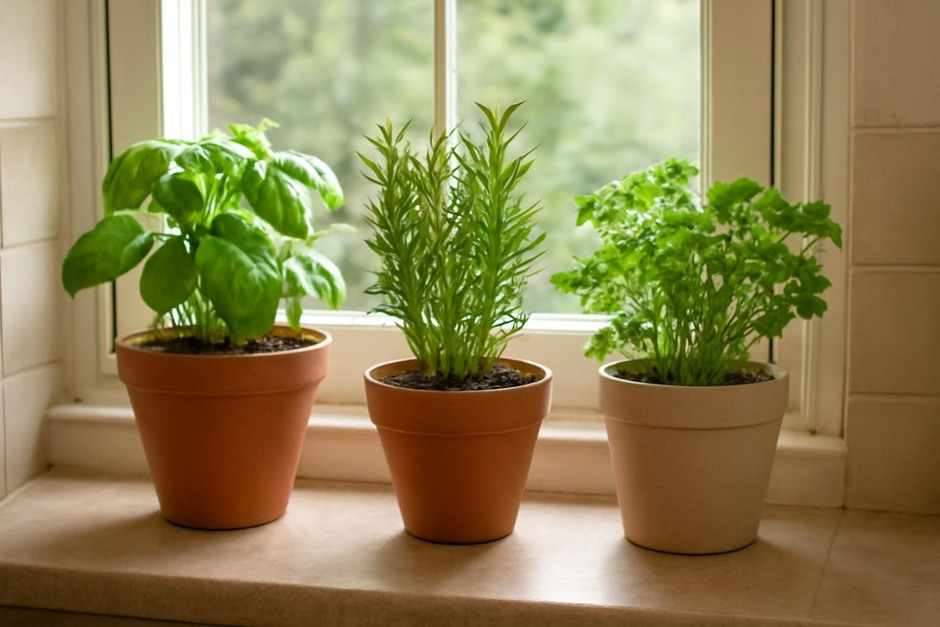
Example A — Sunny windowsill trio (best for Mediterranean herbs)
Space: south or west-facing window with 4–6 hours direct sun. Setup: three 12–15 cm terracotta pots with rosemary, thyme, and oregano. Potting: well-draining mix with 20% perlite. Care rhythm: water deeply once every 7–10 days (adjust by season), pinch tips monthly to encourage branching, and wipe leaves to keep dust off. Why it works: terracotta breathes, and grouping like-light herbs simplifies watering.
Example B — Bright, indirect shelf with basil and parsley
Space: east-facing window or a shelf 60–90 cm from a bright window. Setup: two plastic or glazed ceramic pots (12 cm) with basil and flat-leaf parsley. Lighting: if natural light is marginal, add a directional LED grow strip for 2–3 hours in late afternoon. Care rhythm: water when the top 2 cm is dry (often every 3–5 days in pots), pinch basil tips weekly, and harvest parsley by cutting outer stems at the base. Why it works: these herbs prefer gentler light and respond quickly to regular trimming.
Example C — Balcony rail box for a small outdoor-indoor transition
Space: sheltered south-facing balcony railing or small deck. Setup: a long 40–60 cm planter box with basil, chives, and chervil in alternating pockets. Potting: a lighter mix with added compost and a moisture-retentive coir layer near the surface. Care rhythm: water twice weekly in summer, feed with a weak liquid fertilizer monthly, and rotate the box orientation seasonally if your balcony catches strong wind. Why it works: moving the herbs outside in warm months reduces pest pressure indoors and boosts flavor intensity.
Practice Checklist
- Observe light for one week and map morning vs. afternoon sun.
- Pick plants that match your brightest or shadiest location.
- Use proper soil—loose mix with perlite for most pots.
- Ensure drainage and use a saucer to catch run-off.
- Match pot size to the mature herb (12–15 cm is a good default).
- Set a rhythm: rotate weekly, pinch tips regularly, harvest outer stems.
- Watch water: water deeply, then allow the top 2–3 cm to dry before rewatering.
- Improve airflow and avoid crowded, stagnant corners.
- Seasonal move: bring tender herbs in before cold snaps and send them out when nights warm.
With a few core principles and small, replicable setups, an indoor herb corner can be a reliable source of flavor and a quiet green pause in your home. Start with one of the examples, adapt it to your space, and let a simple maintenance rhythm do the rest.